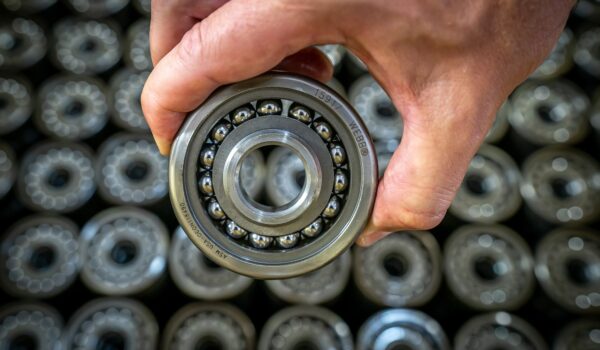
Many factories can produce bearings that meet global standards (for example, ISO 6203–2RS) and are visually indistinguishable from premium brands. However, the production process and resulting product quality can be dramatically different, as well as the impact on the environment and society.
To read more click here.
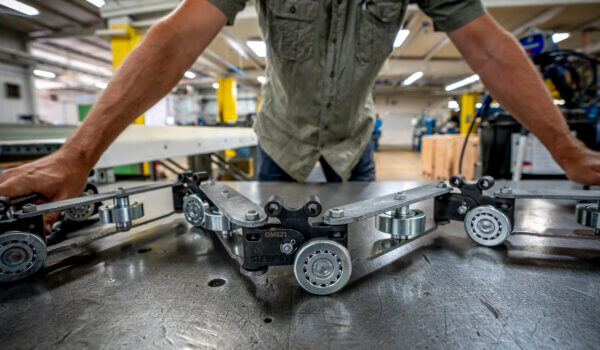
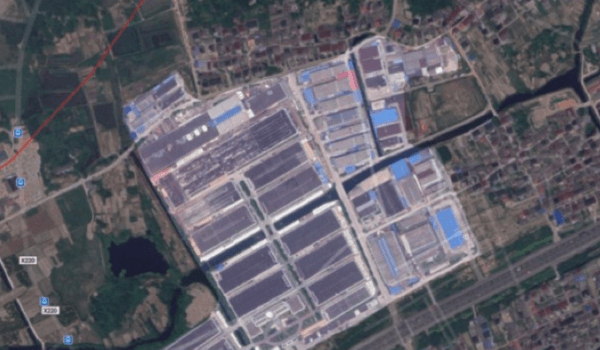
A modern bearing factory in Cixi, China can be thoughtfully laid out across a footprint of 15 US acres, highly automated using lean manufacturing and 6S principles, and managed well with happy labor relations. On the other end of the continuum, a small residential home or garage workshop operated by a family might also comprise a “bearing factory.” Despite this enormous range in sophistication, at the end of the day, many factories can produce bearings that meet global standards (for example, ISO 6203–2RS) and are visually indistinguishable from premium brands. However, the production process and resulting product quality can be dramatically different, as well as the impact on the environment and society.
Sustainable sourcing and Environmental, Social, and Governance (ESG) goals as defined by the UN are usually not top of mind for smaller Chinese factories, who often lack the resources to adopt even basic ESG initiatives. However, what may be surprising to many westerners is that China has taken major steps in the last several years to address the “E” part of ESG, focusing on reducing environmental pollution. Fueled partially by the desire for foreign investment, new regulatory requirements for publicly traded companies now require reporting and disclosure of total emissions for airborne and water pollutants. This in turn is raising awareness and voluntary compliance for non-public companies. After a series of what were described as air pollution “airpocalypses” in the middle of the last decade, a special pollution police force was established, and the worst offending factories were closed. Coal was a primary target, which led to the closure of many lower-quality steel mills which smaller factories were using for raw materials.
The bearing industry ecosystem in China is like many other industrial products manufactured there — centrally planned and located. With the growth of private industry, key employees from state owned companies left to start their own nearby factories. Cixi, about a two-hour drive from Shanghai, was one of the first bearing-focused cities, along with other cities in Zhejiang and Jiangsu provinces that produce high-end bearings. More recently, bearing manufacturing has been moving to the Shandong region, where land costs are as much as 80% less than in Cixi, or even free from the government if the investment is large enough. It may be hard to believe, but there are tens of thousands of families around Shandong operating bearing workshops comprised of a few turning and/or grinding machines inside their homes, surrounded by oil mist, airborne dust, metal turnings and grinding sludge. These families are typically subcontractors producing ready-to-use bearing rings that may end up as part of a finished bearing product sold by a larger global brand.

A typical non-ESG-compliant family style workshop producing subcontracted bearing rings.
For all but the most premium brands and pricing, intra-industry trading is a necessity to fulfill customer orders. When the Chinese government first set up the bearing industry, they assigned to each factory the bearing sizes they would specialize in. This resulted in entire areas of cities all focused on the production of a particular type of bearing and range of sizes. Due to specialization, it is not uncommon for one factory to output the gargantuan amount of over 1 million bearings per day of a common size (for example a 608-ZZ). This requires a large footprint (often the equivalent of several city blocks or more per line) and redundant production equipment. For common bearing sizes, it is safe for manufacturers to make-to-stock, filling entire warehouses with a few sizes. This volume is then moved either through direct procurement or through intra-industry trading with other manufacturers who are set up for different sizes. It is common for one brand to only directly manufacturer 20 or less bearing models, even if their catalog includes more than 1000.
China is an important part of the supply chain for all of the “Big 7” premium manufacturers: Schaeffler (Germany), JTEKT (Japan), SKF (Sweden), NSK (Japan), NTN (Japan), Timken (USA), and Nachi (Japan). Altogether, these brands maintain 60 bearing factories throughout China. Each has specialized production facilities throughout the world that do final processing, cleaning, lubrication, and assembly. As part of their production process, they often source “green rings”, or rings that have been turned and are ready for heat treat and grinding, from the same manufacturers who supply non-premium brands. There are many high-quality Chinese factories that use these same green rings to produce finished products with quality and noise levels on par with the premium brands, without the overhead.

A look inside a Jiangsu production facility that produces high-quality deep groove ball bearings.
The cost savings from sourcing standard, high-quality bearings from China are significant. However, few procurement executives are willing to stick their neck out and buy direct from a lower-cost manufacturer or trading company without having confidence they are sourcing sustainably from a competent and ESG compliant supplier. Today, this can only be accomplished through repeated site visits and audits, routinely conducted by brands such as Apple, Nike, or Microsoft. No major brand wants, nor can afford, to see their name in a WSJ headline saying they are buying parts from polluting, corrupt companies with exploited labor. Many brands have only recently realized that they are already exposed to this “bad supplier” risk, even if they are buying from a premium source. The blame goes up the chain, and manufacturers today are expected to ensure there is sustainable sourcing and ESG compliance all the way down the supply chain, even to raw materials.
Major bearing buyers often have no idea who they are truly sourcing from, so of course in turn they cannot know what their true risks are with respect to ESG and sustainable sourcing. What ESG and quality conscious buyers need is an objective source of granular data at the company and factory level, to incorporate into their own models and ensure they are achieving their company’s ESG and sustainable sourcing goals. To address this critical need, OMCO SUMO is launching our proprietary ESG Ratings Report for Chinese Bearings, starting with 1Q21. This is a quarterly report based on OMCO SUMO’s decades of close partnerships and sustainable sourcing throughout Asia, including detailed information about the ESG footprint and activity at hundreds of bearing and subcontracted component factories, notable brands they supply, as well as identifying all pertinent certifications.

A representative sample of OMCO Sumo’s ESG Ratings Report for Chinese Bearings.
The good news is that many of China’s larger, more reputable bearing factories are now at nearly the same level of environmental sustainability as their peers elsewhere throughout the world. The same organizations we partnered with in the early 2000s that were operating dangerous engine lathes in open air facilities with employees in open-toed shoes standing in metal turnings, today occupy state-of-the art facilities providing thousands of desirable jobs and are supplying many of the most prominent high-quality and premium bearing brands. There are still bad apples to avoid, but for most bearing buyers the primary need for Asian sourcing is to have objective, reliable on-the-ground data to assure customers, and company management, that they are sourcing not just economically, but also sustainably with ESG top of mind. We look forward to sharing more information and helping customers as a co-pilot to achieve ESG goals.
OMCO SUMO is a manufacturer and global OEM supplier focused on ESG and sustainable sourcing for bearings, engineered assemblies, and motion-related components across all industries requiring mechanical power transmission. Established in 1964, with our extensive experience and global supplier networks from over 60 years in business, we are deeply knowledgeable and passionate about helping customers achieve sustainable sourcing and ESG goals, focusing on both the integrity of product performance and the corresponding influence on human rights, the environment, and fair business practices. OMCO SUMO is the first and only provider of proprietary ESG ratings within the power transmission industry covering an extensive and expanding network of manufacturers throughout Asia that provide high-quality lower-cost products, and often sharing the same supply chain with well-known premium brands without the accompanying overhead. Our goal is to support our customers with transparent values-driven business practices that help achieve sustainability of the triple bottom line: people, profit, and planet.
Curious to learn more? Click here to subscribe to the OMCO SUMO Newsletter for insights and best practices for sustainable sourcing of bearings, conveyors, and other motion-related products, or contact us directly at in**@******mo.com. You can also follow us on LinkedIn.